Let me start by saying, I don’t have all the answers. I’m not a manager—I’m an employee who is managed. But because of that, I know exactly how I want to be treated and what I look for in a great manager. I think that perspective gives me plenty of reason to dive into this topic and share my thoughts.

From my personal experience, I can truthfully say I haven’t had much luck with management. Now, don’t get me wrong—I’m an excellent worker and my work ethic is commendable. But some people just aren’t meant to manage, and that’s okay! The question is … how can they be more effective within their role? We’ve all worked under a manager who was either too much of a pushover, way too strict, or flat-out didn’t care about their team. And if you don’t know one of each, then you definitely know the type—and can imagine what it might be like to work with them.
There are many qualities that make a great manager or leader, but the real challenge comes down to knowing how to put those qualities into action when it matters most. For example, if a manager wants to practice inclusivity, they need to create space for open and honest conversations. This gives team members the chance to share how they’re feeling about their work, highlight areas that could be improved, and make sure their workload feels manageable. It also encourages employees to provide constructive feedback, helping the whole team grow together.
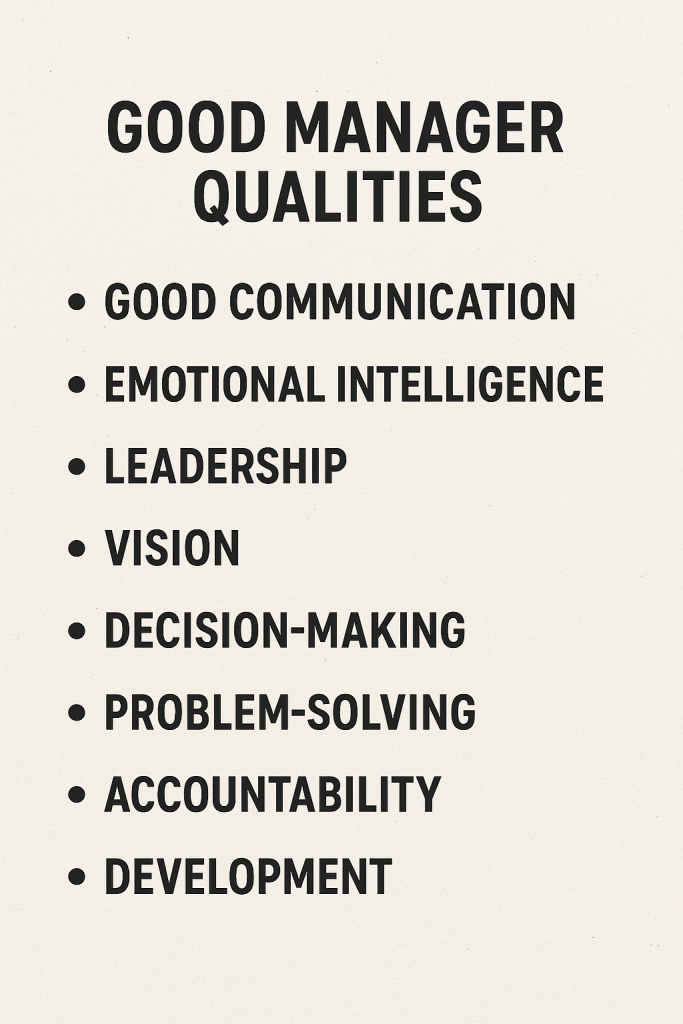
Active listening is one of the most important skills a leader can practice. When managers genuinely hear their team’s concerns, employees feel valued, even in difficult conversations. But when people feel brushed off, they often take their frustrations elsewhere, which can harm morale and the organization as a whole. Active listening isn’t just about nodding along; it’s about creating an environment where employees trust that their voices matter. When managers prove they are willing to listen, they build stronger relationships, foster trust, and encourage open communication that benefits everyone.
Transparency is very important when working with a unique group of individuals. It helps to build trust within the team and holds management accountable for their overall decision-making within the organization. Transparency also connects closely with strong problem-solving skills. When challenges arise, leaders who approach them with precision and openness not only resolve issues more effectively but also reassure their teams that decisions are made fairly and with integrity.
Problem-solving isn’t just about finding quick fixes, it’s about analyzing situations carefully, weighing options, and communicating the reasoning behind chosen solutions. When managers are skilled in problem-solving, they create opportunities to involve their teams in the process, which further strengthens trust and collaboration. In this way, problem-solving and transparency go hand in hand: one supports the other, ensuring that decisions are not only sound but also understood and respected by everyone involved.
One major consideration in leadership is emotional intelligence. It isn’t always easy for people to show empathy, and that’s okay—up to a certain degree. Expressing empathy doesn’t have to mean sharing in every personal struggle, but it does mean taking the time to understand the needs of your team. Strong managers are able to step outside of their own perspective when something is directly affecting a team member, meeting employees where they are. This approach helps team members feel that their personal lives are respected and valued. In turn, it reduces resentment that can build when employees feel overlooked or dismissed. Emotional intelligence, therefore, isn’t about being overly sentimental—it’s about creating an environment where people feel supported as whole individuals, not just as workers.
I’ve worked with managers who struggled to put these qualities into practice, and it can be tough on employees. No one is perfect, and everyone has room to grow, but how can a manager grow if they aren’t willing to touch the surface? Honestly, this reflection comes from my own experiences: what I’ve seen in the workplace, what I believe good management looks like, and the kind of leader I hope to become. While every manager’s style may differ, the core qualities of good leadership remain the same. The key is intentionally incorporating them and recognizing how they impact not only your work but also the work of your team.
One thing is for sure: when my time comes to manage or lead, I want to inspire others the way I’ve always hoped to be inspired by a leader. I know I’ll make mistakes along the way, but growth is what matters most. Some leaders get stuck in their ways, and while it might be easy to shrug it off, the truth is—it’s not fine. Employees need to know they can rely on their manager when it really counts. A manager doesn’t need to be a best friend, but they do need to be a steady source of support for their team.
-JellyBean
References
Raeburn, A. (2025, February 12). What makes a good manager? 10 qualities to lead successful teams. Retrieved from https://asana.com


Leave a comment